(Fanwood, NJ) — As Alex Holston’s Eagle Scout service project, the rain garden outside the Borough of Fanwood Municipal Complex was restored and expanded to improve storm water management, support the local environment, and serve as a demonstration garden for local residents to consider installing in their own yard.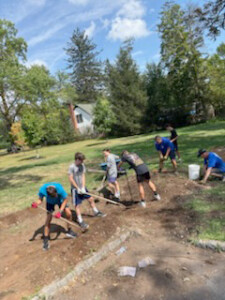
In August of 2025, Alex, with the help of 10 fellow scouts of Troop 33 of Fanwood, and seven adults, built a shallow basin landscaped to capture and filter storm water at the source before it becomes runoff. In a rain garden, healthy soil and deep-rooted perennial plants move storm water into the ground and help remove pollutants. This Eagle Scout project was built over three days in a mix of 90-plus degree weather and pouring rain.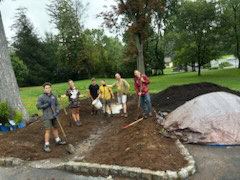
“It was really cool to see our group turn this cluster of invasive species and weeds into a flourishing garden,” Alex said. “(Fanwood Environmental Commission Chair Mrs. (Leslie) Kronespeck and I worked on the garden’s new layout and I hope it will be here for years.”
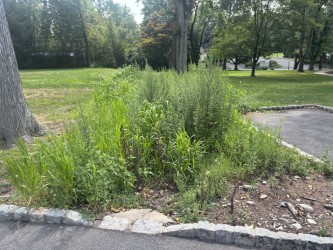
The original, 20-year-old rain garden had stopped working effectively because the grading was too shallow to manage runoff and was overrun with poison ivy, and, as a result, was not maintained for a period.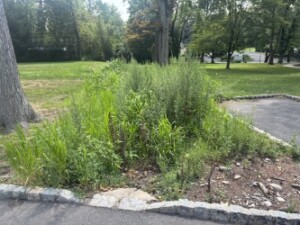
Alex expanded the garden to approximately 13 by 26 feet and redesigned it to better capture and filter storm water. This rain garden now collects rainwater runoff to avoid peak flows to the storm water systems and avoids flood surges. Alex researched to find native deep-rooted plants that allow water to soak into the ground while helping remove pollutants.
The upgraded garden was designed to capture runoff from several areas of the municipal complex including the paved and lawn areas in front of the municipal building, a grassy entryway area, and runoff from a three-space visitor parking lot.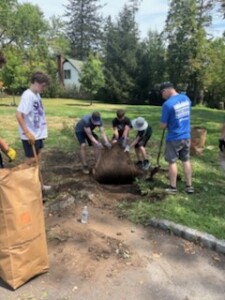
Working with Leslie Kronespeck of the Fanwood Environmental Commission, Alex and volunteers expanded the garden’s shape and slope, removed invasive and non-native plants, and reused rocks from the original garden to help stabilize the soil at the base of the basin. New topsoil and mulch, donated by Bartell’s in Clark, and native plants, donated by Dreyer Farms in Cranford, were installed to improve drainage and filtration.
The garden now includes native plants such as milkweed, goldenrod, and big bluestem. These plants help absorb stormwater and pollutants, while supporting pollinators like Monarch butterflies and American bumblebees.
The project also emphasized community education. Alex created a sign at the garden site explaining how rain gardens work and identifying the plants used and the Fanwood Environmental Commission’s website will have instructions on how to install a rain garden at their own homes.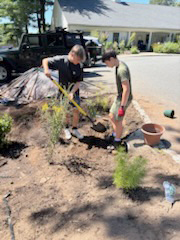
By restoring and expanding the rain garden, the project improved storm water management at the municipal complex, while creating a valuable environmental resource for the Fanwood community.
“Fanwood is thankful for the dedication and hard work that Alex, his family and Troop 33 have provided for the community’s benefit,” Kronespeck said. “This major contribution to the community will promote environmental sustainability and also awareness of the benefits of rain gardens.”